
How to Get Rid of Bed Bugs: Bed Bug Treatment in Fort Worth and White Settlement
Getting rid of bed bugs usually takes a careful inspection, several treatment steps used together, and follow-up checks. A single spray from the hardware store rarely finishes the job. The EPA says bed bug control can take weeks to months, depending on how big the infestation is, how much clutter there is, and whether neighbors have them too.
If you suspect bed bugs in your house or apartment, you can book online or call (817) 715-2595.
How do you know it's bed bugs and not something else? #
Only physical evidence can confirm an infestation. Bites alone are a poor clue, since they resemble mosquito bites, chigger bites, rashes or hives, and some people never react at all.
Look for these signs of bed bugs:
- Reddish or rust-colored marks on bedding, left when a bug is crushed.
- Small dark spots of bed bug excrement that bleed into fabric like marker ink.
- Eggs and eggshells, about 1 mm long (pinhead size) and pearl-white.
- Shed skins, pale yellow to tan, left behind as young bed bugs grow.
- Live bugs tucked into seams, cracks and crevices.
- A sweetish odor, which Texas A&M says is usually present where bed bugs are numerous.
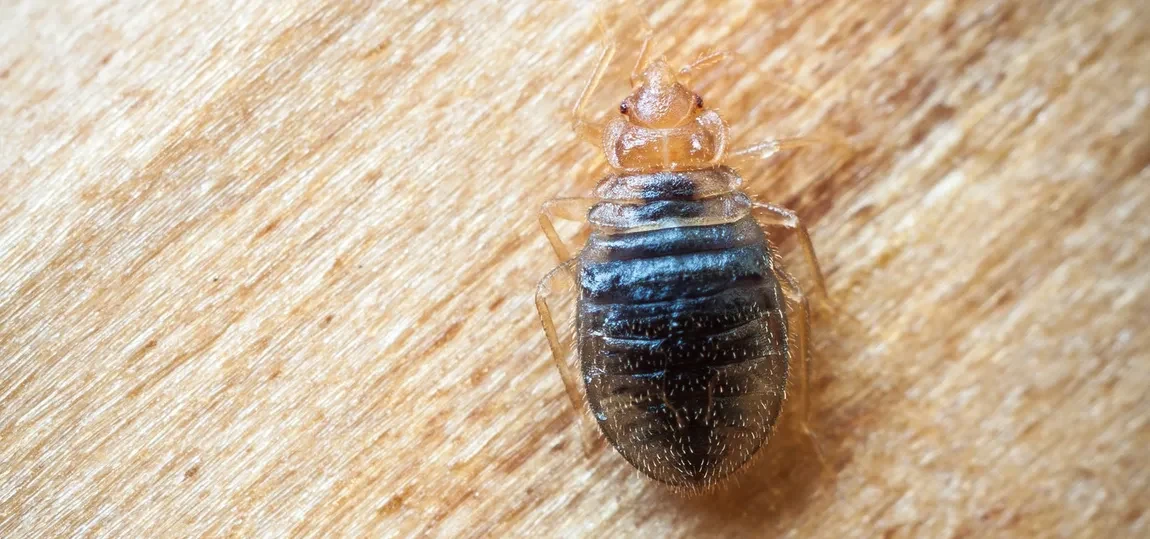
Adults are about the size and color of an apple seed: flat and brown when unfed, reddish-brown and swollen after feeding. Young bed bugs are paler and can be nearly invisible. Carpet beetles are often confused with bed bugs, and so are ticks and cockroaches. Misidentifying them gives a real infestation more time to spread.
What do bed bug bites look like? #
Bed bug bites are itchy welts, often in a line or zigzag, on skin left uncovered while you sleep, such as the arms, legs, face, neck, shoulders and back. The bite itself is painless, so you usually notice it later.
Reactions vary. Most people see marks within a day to several days, but some take up to 14 days. About 30 percent of people don't react at all. Flea bites tend to show up around the ankles and lower legs, so if that is where yours are, see our flea and tick control page.
For care, the American Academy of Dermatology suggests washing bites with soap and water, avoiding scratching, and using a corticosteroid cream for itch. See a doctor for many bites, blisters, signs of infection, or hives and swelling. Get immediate medical care for trouble breathing, a swollen tongue, fever, or a heartbeat that is irregular or forceful.
Bed bugs are not known to spread disease, according to the CDC. The harm comes from itching, lost sleep and stress. Treating bites only eases symptoms; ending the infestation is the only way to stop them.
Where do bed bugs hide? #
Bed bugs settle into tight spots near where people sleep, usually within about 8 feet of the bed. Start your search at the bed and work outward:
- Seams, piping and tags on the mattress and box spring.
- Cracks in the bed frame and headboard.
- Chair and couch seams and cushions, plus curtain folds.
- Drawer joints, outlets and appliances close to the bed.
- Loose wallpaper, picture frames, baseboards, carpet edges, and door and window casings.
The EPA's guide to finding bed bugs puts it simply: a gap wide enough for a credit card can hide one. Inspectors often have to take the bed apart to check it thoroughly.
What should you do before the technician arrives? #
Prep depends on your home, so ask the office what applies to you when you book. These general steps can help in the meantime:
- Wash and dry bedding and clothes. Run them through a dryer on high heat for about 30 minutes, which kills bed bugs at every life stage.
- Clear clutter from under and around the bed, since clutter makes treatment harder and gives bugs more places to hide.
- Keep your furniture. Don't throw out a bed or couch that can be treated. If you must discard something, make it unusable so nobody takes it home.
- Note what you've seen: where you found stains, skins or live bugs, and when.
Why don't store-bought sprays usually work? #
Many bed bug populations have developed resistance to common insecticides, so a can from the store often fails to kill bed bugs.
- Foggers (bug bombs) don't reach the cracks where bed bugs hide, and they carry fire and injury risks. Dermatologists say bug sprays and foggers have little effect on bed bugs.
- Home remedies such as rubbing alcohol, kerosene and gasoline can harm people and start fires, according to the EPA. Heating the house with space heaters or a fireplace won't work and is dangerous.
- Dust products need care. The EPA says pool-grade or food-grade dusts should not be used for bed bugs because they can harm your lungs if breathed in.
If you do use any pesticide, choose an EPA-registered product with bed bugs listed on the label, and follow the label directions exactly. The EPA's do-it-yourself bed bug control page explains more.
What non-chemical steps help control bed bugs? #
These steps lower bed bug numbers and keep an infestation from spreading, whether or not you hire a pro:
| Step | What to do |
|---|---|
| Dryer heat | Run bedding, clothes, shoes and bags on high heat for about 30 minutes. |
| Freezing | Seal items that can't go in the dryer in a plastic bag and freeze them for several days. The freezer must hold 0°F all the way through the items, so check it with a thermometer. |
| Steam | Steam mattress seams and upholstery at 130°F or higher, without strong airflow that scatters the bugs. |
| Vacuuming | Vacuum seams, cracks and furniture often. Seal the vacuum bag and put it in an outdoor trash container right away. |
| Encasements | Zippered bed bug covers on the mattress and box spring trap bugs inside and make checks easier. |
| Interceptors | Traps under bed and furniture legs catch climbing bugs and help you monitor. Keep bedding off the floor. |
Also seal cracks with caulk and cut down clutter. The EPA says a combination of chemical and non-chemical methods, known as integrated pest management, can be the most effective approach.
How does Spyder Pest Solutions handle bed bugs? #
Spyder starts with an inspection to find where the bed bugs are and how far they have spread. The technician then explains the treatment options for your situation. Bed bugs can require multiple treatments, and follow-up visits are usually needed, so nobody should expect a one-visit fix.
Pricing is quoted after the inspection, so call for pricing. When you book online or by phone, the office confirms your appointment time. We're open Monday through Friday, 8am to 6pm.
Spyder Pest Solutions is family-run and owner-operated. The licensed company is Spyder Pest Solutions LLC, Texas Department of Agriculture structural pest control license TPCL #0954843, with certified applicator Sebastian Cadena. We handle general pests, including bed bugs, along with rodents, mosquitoes and wildlife exclusion. We do not offer termite or lawn and ornamental services.
We serve homes and businesses in White Settlement, west Fort Worth, Westworth Village, River Oaks, Lake Worth and Benbrook. Our office is at 112 N Las Vegas Trail, Fort Worth, TX 76108.
What about bed bugs in an apartment? #
In an apartment, bed bugs can spread from one unit to the next, so the neighbors on each side, above and below may need checking too. Report any suspected problem to your property manager right away, by phone and in writing.
Treating only your unit may leave the source next door, and bed bugs can crawl more than 100 feet in a night. If you rent, talk with your manager before scheduling anything, so the plan covers every affected unit.
What happens after treatment? #
Keep checking after treatment, including any interceptor traps, at least every 7 days in case eggs survived. A few live bugs may still show up for a week or more after a treatment. The EPA recommends monitoring for at least a year to confirm the bed bugs are gone. If you see live bugs again, tell us so we can plan further treatment.
How do bed bugs get into homes? #
Bed bugs are hitchhikers. They crawl into suitcases, bags, folded laundry, bedding and furniture, and people carry them home without knowing. Common sources are:
- Hotel stays and other travel.
- Secondhand furniture and mattresses.
- A nearby infested apartment, or a move between homes.
A few habits help. Keep luggage off the floor and bed when you travel, and check mattress seams and the headboard in hotel rooms. Inspect used furniture before bringing it in, and avoid curbside mattresses and sofas. Texas A&M's overview of spotting and preventing bed bugs covers more travel tips.
For professional help, see our bed bug treatment service page. It explains what the service covers, how a visit goes and what to do before the technician arrives.