
Fire Ant Treatment and Ant Control Around Fort Worth, TX
Fire ant control around a Fort Worth-area home works best when the ant is identified first, bait goes out across the whole yard, and problem mounds get their own treatment. Ants inside the house usually need a different approach, because treatment depends on the species. Spyder Pest Solutions treats fire ants in yards and around the home, and also handles odorous house ants, pharaoh ants and carpenter ants.
To have a technician look at your ants, book online or call (817) 715-2595.
How do I get rid of fire ants in my yard? #
Use bait, and treat the problem mounds separately. Texas A&M AgriLife promotes a Two-Step Method built around those two steps.
- Step one: broadcast bait over the whole yard. The ground should be dry, no rain should be due for 24 to 48 hours, and the ants should be out foraging. A quick test is to see whether workers carry off a bit of bait within about 30 minutes. AgriLife says 30 minutes while Texas A&M says 1 hour, so give it a little time either way.
- Step two: treat the mounds that bother you most. Drench or treat the mounds that cause the most trouble.
- Repeat as needed. AgriLife describes the method as best suited to yards with about five or more mounds per quarter acre, and says re-baiting once or twice a year is typical.
Bait works because workers carry it back to the colony. A fire ant colony can hold 100,000 to 500,000 workers, and queens can live more than 7 years, so killing the ants you can see does little. Bait products act at different speeds, from about 3 days to 6 months depending on the active ingredient. A yard can look unchanged for a while even when the bait is doing its job.
Two cautions from AgriLife: old, rancid bait may keep ants away, and you should not water bait in after spreading it.
How can I tell fire ants from other ants? #
Check the size, the color and where the ants are. Fire ants build mounds in the yard, and the other common household ants show up as trails indoors.
| Ant | Size | Look and clues |
|---|---|---|
| Red imported fire ant | 1/16 to almost 1/4 inch, mixed sizes in one colony | Reddish-brown; fluffy dirt mound with no opening on top; workers swarm up vertical surfaces when disturbed |
| Odorous house ant | 1/16 to 1/8 inch, all one size | Brown to black; smells like rotten coconut when crushed |
| Pharaoh ant | About 1/16 inch | Light tan to reddish; often called a "sugar ant" |
| Carpenter ant | 1/4 inch or more | One node at the waist, rounded thorax; often a reddish head and thorax with a black abdomen |
Fire ant mounds are easiest to spot in the days after a downpour, and the mound has no opening on top.
Don't poke the mound to confirm it. If you're unsure what you have, collect a few ants in a small container and show them to the technician.
When is the best time to treat fire ants in North Texas? #
For bait in North Texas, AgriLife's guidance points to May through September, when the soil about an inch down is roughly 70 to 95°F. In the hottest months, put it out late in the evening. A broadcast treatment between late August and mid-October is also recommended.
Clemson University suggests spring and fall broadcasts, so you may see slightly different timing advice elsewhere. For your particular yard, the technician can look at how active the mounds are and explain the options. Fire ant mating flights follow rain in spring and fall.
Tarrant County is on the Texas Department of Agriculture's list of counties quarantined for fire ants.
Why do fire ants show up in AC units and electrical boxes? #
The damage can add up. AgriLife says fire ants nest in air conditioner units and electrical boxes, and that shocked ants attract more ants until switches fail. AgriLife puts the cost at roughly $11.2 million per year in Texas electrical damage.
Signs of a problem include tripped breakers and AC units that stop working with ants inside. Floods can drive fire ants indoors, and drought can push them toward moisture.
If ants are in an electrical box, turn off the power and have an electrician or a licensed pest professional deal with it. AgriLife advises against pouring liquid drenches into electrical equipment.
Which home remedies don't work on fire ants? #
Most kitchen-cabinet fixes fail. AgriLife lists grits, cinnamon, bleach, soapy water, club soda and essential oils as ineffective. Gasoline is dangerous and shouldn't be used.
Pouring boiling water on a mound works only about 60% of the time and damages the grass too.
What should I do after a fire ant sting? #
Get the ants off quickly. Brush or rub them off briskly, because water won't dislodge them. Stings burn, and within a day or two a small white pustule usually appears. Leave the pustule alone. Taking an antihistamine according to the package directions is a common step.
Fewer than 1% of people who are stung have a severe allergic reaction, according to AgriLife's sting information. Still, AgriLife says to get medical care right away if you have slurred speech, serious swelling, trouble breathing, heavy sweating, nausea or chest pain. More detail is on AgriLife's fire ant medical information page and in the CDC's outdoor-worker guidance on insects.
Why do ants keep coming back inside after I spray? #
Sprays only kill the ants you can see. AgriLife's household ant guidance (see its Managing Household Ant Pests publication) recommends bait instead, so workers carry it back to the nest. Don't spray near bait, because that defeats it.
Two species show how this plays out indoors:
- Odorous house ants like sweet baits and ignore the oil-based baits used for fire ants. AgriLife's odorous house ant page is a good reference for identifying them.
- Pharaoh ants need pharaoh-specific baits. Spraying can split a pharaoh ant colony into several, which makes the problem worse. AgriLife and Texas Parks and Wildlife call this one the "sugar ant."
Indoor baits are slow, often taking three to four weeks or more. Give the bait time to work before deciding it failed.
What about carpenter ants? #
Carpenter ants are larger ants that make their nests in wood, insulation or hollow voids, but they don't eat wood. Texas A&M AgriLife says Texas species are mainly nuisance pests that rarely damage framing lumber. They tend to live in existing voids, such as hollow doors and behind insulation, and forage mostly at night.
Signs include winged ants showing up inside during late winter or spring, plus cone-shaped piles of shredded wood called frass. AgriLife also says carpenter ants are reportable in real estate sales, so they matter if you plan to sell. They can bite but do not sting. Because they favor damp wood, they can also point to a leak. See AgriLife's carpenter ant fact sheet for more.
AgriLife notes that store-bought bait stations and boric acid dust are not effective against Texas carpenter ants. Professionals typically find the nest voids first. Termite treatments won't control carpenter ants either.
Winged carpenter ants look like winged termites, and the two can swarm at the same time. Carpenter ants pinch in at the waist, have bent antennae and have front wings longer than the back pair. Termites look thicker through the middle, with straight antennae and wings of equal length. Spyder's license covers general pest work and does not include termites, so if the swarmers turn out to be termites, you would need a termite-licensed company. A few ants in a container make that identification much easier.
How can I prevent ants around my house? #
Most of AgriLife's prevention advice is about removing food, water and shelter:
- Clean up spills and seal food containers.
- Fix leaks, since moisture draws ants and damp wood draws carpenter ants.
- Pull mulch back from the foundation.
- Caulk cracks around the home's exterior.
- Clean the gutters.
- Trim tree limbs that touch the roof.
- Control aphids on plants, since ants feed on their honeydew.
How should I prepare for an ant visit? #
A few notes help the technician work faster:
- Write down where you see ants, what time of day, and whether any have wings.
- Note any mounds, and where ants appear at outlets, AC units or along baseboards.
- Mark any leaks or damp wood you know about.
- Collect a few ants in a small sealed container.
- Hold off on spraying or wiping away trails until after the visit, since trails show where the ants travel.
- Keep children and pets away from mounds.
How does Spyder Pest Solutions handle ants? #
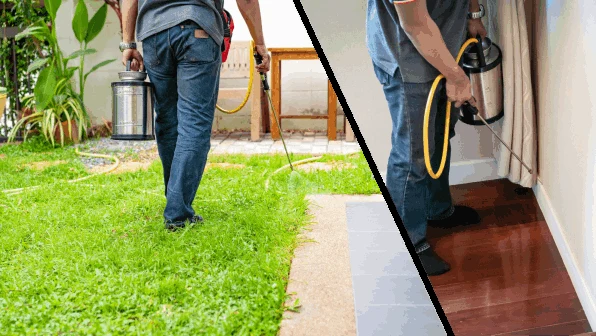
We start with an inspection, indoors and out, because the right plan depends on the species and where the colony is. The technician explains the options and what to expect. Fire ants in the yard and around the home, ants inside, and carpenter ants are all handled under the general pest license. This is not a lawn-care program, and we don't offer lawn and ornamental plant work.
Pricing is quoted after the inspection, so please call for pricing. The office confirms your appointment time after you book online or call. Our hours are Monday through Friday, 8am to 6pm.
Spyder Pest Solutions LLC (TPCL #0954843) is a family-run, owner-operated company at 112 N Las Vegas Trail, Fort Worth, TX 76108. We serve White Settlement, west Fort Worth, Westworth Village, River Oaks, Lake Worth and Benbrook.
If stings are a worry around the yard, wasp nests are another stinging risk. See our wasp control guide, and for yard pests more broadly, our mosquito and flea and tick pages.
For professional help, see our fire ant treatment service page. It explains what the service covers, how a visit goes and what to do before the technician arrives.