
Mosquito Control for Yards in Fort Worth and White Settlement, TX
Mosquito control in the Fort Worth area starts with standing water, because every mosquito needs it to grow up. Dumping water, trimming vegetation, and having a technician from a licensed company look over your yard for breeding areas are practical first steps toward fewer bites. Mosquitoes are more than a nuisance, so it pays to deal with them early in the season.
You can book online or call (817) 715-2595 to set up a yard inspection.
Where do mosquitoes in my yard come from? #
They come from water that sits still, often close by. Tarrant County Public Health (TCPH) treats water that stays undisturbed for a week or longer as a potential breeding ground, and its mosquito-free guidance is to dump standing water and keep vegetation trimmed.
Ohio State University Extension notes that Asian tiger mosquitoes lay eggs along the rims of containers such as flowerpots, and also in tree holes. Common problem spots around a home include:
- Flowerpot saucers and planters
- Buckets, toys and old tires
- Birdbaths and pools
- Trash containers
- Rain barrels without tight covers
How fast does standing water turn into biting mosquitoes? #
A week is enough. Texas A&M AgriLife Extension says any place where water can sit for seven to 10 days is a problem to fix. Mosquitoes go from egg to larva to pupa to adult, and the first three stages live in the water.
For container-breeding Aedes mosquitoes, the CDC puts the egg-to-adult time at about 7 to 10 days. The eggs are laid on the inside wall of a container just above the waterline and can survive drying out for months. The next rain or a sprinkler can hatch them.
That is why a one-time yard cleanup helps but does not finish the job. A weekly walk-through catches new water before it turns into new mosquitoes.
Which mosquitoes bite in Fort Worth-area yards? #
TCPH tracks a handful of species, and they differ in when they bite and what they look like. TCPH tests several Culex mosquitoes for West Nile virus and monitors two Aedes species through its mosquito surveillance program.
| Mosquito | When it bites | How to spot it |
|---|---|---|
| Southern house mosquito | Dusk to dawn | Dull brown, no bands on the legs |
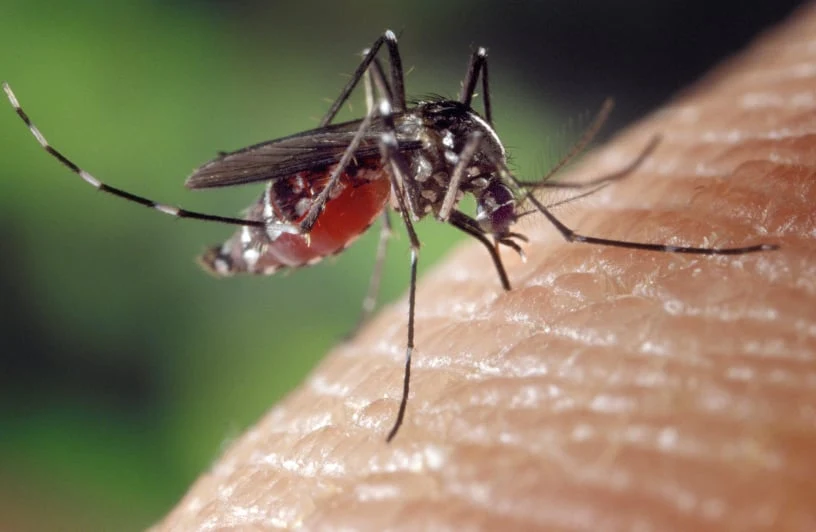
| Asian tiger mosquito | Daytime, mostly early morning to late afternoon | Black with white leg stripes and a white stripe on the head and back |
| Yellow fever mosquito | Daytime; prefers people | Close relative of the Asian tiger mosquito |
Texas A&M's Mosquito Safari says the southern house mosquito often enters homes through unscreened windows or open doors and bites sleeping people. It rarely flies more than a mile from where it developed.
So if you are getting bitten on the patio at noon, you are probably dealing with a different mosquito than the one that wakes you at 3 a.m. Both usually started life nearby.
Are mosquitoes just a nuisance, or a health risk? #
Mosquitoes are both. Most bites mean only itching, but mosquitoes can carry dangerous diseases, and the one that matters most locally is West Nile virus.
According to TCPH, West Nile virus is carried and most commonly spread to people and horses by the southern house mosquito. Here is how the numbers break down:
- Most infected people never feel sick.
- About one in five develops a fever and other symptoms.
- About one in 150 develops a serious, sometimes fatal illness.
The CDC says there is no vaccine or medicine to prevent or treat West Nile in people. TCPH says West Nile activity typically rises from May through October. In 2026 the county reported its first West Nile-positive mosquito samples on May 14, including samples from Fort Worth.
Daytime Aedes mosquitoes can spread dengue fever, chikungunya and Zika. TCPH's weekly arbovirus report for early August 2026 noted that all reported chikungunya, dengue and Zika human cases in its table were travel-related. The CDC says almost all U.S. malaria cases are also imported by travelers.
TCPH runs a Vector Information Hotline at 817-321-4709 if you have questions about mosquito-borne illness in the county.
What should I do before the technician arrives? #
Clear what you can, and leave what you cannot for the technician to see. A short checklist:
- Empty, scrub or flip over buckets, toys, saucers and birdbaths.
- Note any spot that stays wet after rain so you can point it out.
- Trim overgrown shrubs and tall grass.
- Cover rain barrels or other containers you want to keep.
- Take note of where you get bitten most, and at what time of day.
- Write down questions about children, pets, a garden or a pool so you can ask them during the visit.
Do not worry if some water is still there when the technician arrives. Finding it is part of the job.
How does Spyder handle mosquito control? #
Spyder Pest Solutions begins with an inspection of your property. The technician inspects the yard and explains the options that fit what they find, so you can decide what makes sense for your situation.
Pricing is quoted after the inspection, so call for pricing. Spyder is a family-run, owner-operated company, and the certified applicator is Sebastian Cadena, the company president. You can book through the online form or by phone, and the office confirms your appointment time.
The EPA describes mosquito management as a mix of surveillance, removing breeding habitat, treatments aimed at larvae, treatments aimed at adults, and resident education. It also says choosing among treatments is best left to experts. That is why the inspection comes first.
How long does a yard treatment last? #
Not forever, and you should be skeptical of anyone who promises otherwise. Texas A&M AgriLife Extension says homeowner sprays last only 24 to 48 hours. Professional barrier products last longer but lose effectiveness over time. Mosquito numbers can also jump after heavy rain.
The same AgriLife report says city spraying is temporary and usually happens at night. TCPH notes that cities and unincorporated parts of Tarrant County may treat for mosquitoes as needed. That helps the neighborhood, but it does not clear the water sitting in your own backyard.
The best results come from combining a professional visit with your own weekly habits. Your technician can explain how often your property may need attention based on what the inspection shows.
What can I do between visits? #
Keep up the weekly water check, and protect yourself when you are outside. Peak biting hours are dawn and dusk for the West Nile carrier, and daytime for the Aedes mosquitoes.
- Wear loose long sleeves and pants, especially at dawn and dusk.
- Use an EPA-registered insect repellent and follow the label directions, including the directions for children.
- Keep window and door screens in good repair so mosquitoes stay out of the house.
- Stay indoors during peak hours when you can, as TCPH suggests.
- Keep the lawn and shrubs trimmed, since adults rest in dark, humid spots.
For itchy bites, the CDC suggests washing the bite with soap and water, applying a cold pack, and using an over-the-counter anti-itch product. Watch for signs of infection, such as spreading redness or warmth. See a healthcare provider if symptoms worsen. Seek medical attention right away for high fever, stiff neck, confusion or muscle weakness.
Where does Spyder provide mosquito control? #
Spyder Pest Solutions serves White Settlement, west Fort Worth, Westworth Village, River Oaks, Lake Worth and Benbrook. The office is at 112 N Las Vegas Trail, Fort Worth, TX 76108, and it is open Monday through Friday, 8am to 6pm.
Spyder Pest Solutions LLC holds Texas Department of Agriculture structural pest control license TPCL #0954843 in the general pest category. Spyder also handles other yard and home pests, including fire ants, wasps, spiders and fleas and ticks.
For professional help, see our mosquito control service page. It explains what the service covers, how a visit goes and what to do before the technician arrives.