
Spider Control and Brown Recluse Help in North Texas Homes
Most spiders in North Texas homes are not dangerous, but two types matter: the brown recluse and the black widow. Spider control starts with figuring out which spider you have, then removing what draws spiders and their prey into your house. A licensed technician can inspect, tell you what is living there, and explain your options.
You can book online or call (817) 715-2595 to set up an inspection.
Which spiders in Texas are actually dangerous? #
Only two groups are considered medically significant in Texas: recluse spiders, including the brown recluse, and widow spiders, including the black widow. The Texas Department of State Health Services says both live indoors and outdoors across the state.
Every other spider you meet is far more likely to be a helpful predator. Texas A&M AgriLife Extension describes spiders as largely beneficial, because they feed on flies and plant-eating insects. They rarely bite people.
How do I tell a brown recluse from other spiders? #
Look at the eyes first. A brown recluse has six eyes in three pairs, while most spiders have eight. Color and size help too: light to dark brown, slender legs with no spines, and a leg span roughly the size of a quarter to a half-dollar.
The dark violin mark behind the head gets all the attention, but it is the least reliable clue. A Texas A&M AgriLife specialist points out that it can be faint and can resemble markings on spiders that pose no threat.
Brown recluse spiders are shy and mostly active at night. They do not catch prey in a web. They hide in silk-lined cracks and come out to hunt.
Typical hiding spots:
- Cardboard boxes in closets and attics
- Garages, crawl spaces, and cluttered storage areas
- Narrow, dry crevices, under insulation, and inside wall voids
- Outdoors: firewood stacks, boards left on the ground, rock ledges, and bark on dead trees
Outdoors they are active from spring through fall. Inside a climate-controlled house they can be active year-round.
How do I recognize a black widow? #
An adult female black widow is shiny black with a round abdomen and a red or yellowish hourglass on the underside. Her body is about half an inch long, and males are much smaller. The hourglass can be split into two triangles, and occasionally it is missing.
Widows build tangled, sticky webs in sheltered places and usually hang upside down in them. Look in woodpiles, garages, shrubbery, crawl spaces, and gas or electric meter boxes. Their round egg sacs hang in the web.
The brown widow, also found in Texas, is smaller and mottled tan, brown, and gray. University of California IPM reports that its bite is much milder than a black widow's.
Which common house spiders can I mostly ignore? #
These are the ones most people actually find, and none are a medical concern:
| Spider | What you will notice | Where you will find it |
|---|---|---|
| Wolf spider | Hairy, mottled brown or gray, often two dark stripes behind the head; large eyes on top of the head | Yards and lawns; wanders in under doors |
| Jumping spider | Stocky, often colorful, jumps; one large pair of front eyes | Daytime hunter on plants and the ground |
| Common house spider | Cobwebs in corners and windows | Undisturbed indoor corners |
| Cellar spider | Very long legs; messy cobwebs | Indoors, especially undisturbed corners |
| Orb weaver | Classic round web | Outdoors, in round webs |
Wolf spiders are often mistaken for brown recluse spiders. Wolf spiders have no violin mark, and they have a large pair of eyes on top of the head. Harvestmen, often called daddy longlegs, are not spiders at all.
What attracts spiders to a house? #
Spiders follow their food, so insects are the main draw. Outdoor lights attract insects, and spiders set up where the insects gather. That is why webs collect around porch lights, doors, and windows.
Other things that attract spiders:
- Gaps around doors, windows, pipes, and wires
- Firewood, lumber, or boards stacked against the house
- Shrubs and branches touching exterior walls
- Clutter and cardboard boxes in garages, closets, and attics
Spiders also move indoors during drought or when the weather turns cooler, according to Texas A&M AgriLife.
What are the signs of a spider infestation? #
Look for these signs:
- Webs in corners, eaves, windows, and storage areas
- Tangled, sticky webs near the ground in garages or around woodpiles
- Egg sacs in webs or tucked into sheltered spots
- Spiders on sticky traps along walls, in closets, or under furniture
- Spiders in boxes, shoes, clothing, or bedding that has sat unused
Finding one spider is normal. Finding several brown recluse spiders over time is a reason to act, since Texas A&M notes that even professionals find recluse infestations difficult to control.
What should I do before the technician arrives? #
A clear space lets the technician see what is going on. Texas A&M's brown recluse guidance specifically recommends reducing clutter ahead of a professional visit.
- Clear a path to closets, garages, attics, and crawl-space access.
- Pull stored boxes away from walls so the technician can see behind them.
- Note where you have seen spiders, webs, or egg sacs, and when.
- If you can, capture a spider you are unsure about in a jar for identification.
- Sticky traps along walls, in closets, and under furniture can show where spiders are moving. Keep them away from children and pets.
- Move firewood and stacked boards away from the house if you can.
How does Spyder handle spider control? #
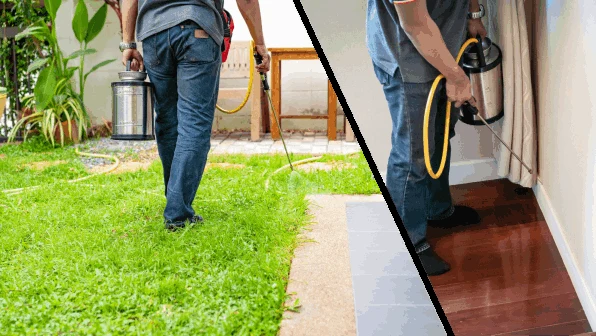
Spyder starts with an inspection. The technician works out which spiders you have and why they are there.
The technician then explains the options for your situation, and you decide how to proceed.
Spyder Pest Solutions LLC is a family-run, owner-operated company in Fort Worth, licensed by the Texas Department of Agriculture (TPCL #0954843, general pest category). Pricing is quoted after the inspection, so call for pricing.
Can I get rid of spiders myself? #
Cleaning and removal can cut down the spiders you see. Texas A&M calls a hand vacuum the best tool, since it takes up spiders, webs, and egg sacs in one pass.
- Vacuum corners, ceiling edges, window frames, and storage areas, then empty the vacuum outside.
- Knock down webs with a broom or web duster.
- Seal cardboard boxes along every seam, or switch to plastic containers with tight lids.
- Install weather stripping and caulk gaps around doors, windows, pipes, and wires.
- Point outdoor lights away from doorways, or switch to yellow bug lights, which attract fewer insects.
- Trim shrubs that touch the house, and keep firewood off the walls.
Spraying alone rarely solves the problem. Texas A&M says sanitation and physical removal are the foundation, because many spiders sit in webs above treated surfaces and tolerate common products better than other insects do. If you suspect brown recluse spiders, an inspection helps you know what you are dealing with.
How can I prevent spider bites? #
Most bites are accidents, happening when a spider is pressed against skin or trapped.
- Shake out stored clothing, shoes, towels, and bedding before use.
- Wear gloves when moving firewood, boxes, or boards, and when cleaning garages, sheds, and attics.
- Keep stored clothes and equipment in sealed bags or containers.
- Look before reaching into meter boxes, woodpiles, or under outdoor furniture.
What should I do if a spider bites me? #
Wash the bite with soap and water and apply a cold, damp cloth or ice pack. If you can capture the spider without touching it bare-handed, keep it for identification. For advice, call the Texas Poison Center Network at 1-800-222-1222 or your doctor.
Seek medical care for a suspected black widow or brown recluse bite, a strong reaction, trouble breathing, or a wound that does not heal. Many skin sores blamed on spiders turn out to have other causes, including bacterial infections, so a doctor's evaluation matters.
Where does Spyder provide spider control? #
Spyder serves homes in White Settlement, west Fort Worth, Westworth Village, River Oaks, Lake Worth, and Benbrook. The office is at 112 N Las Vegas Trail, Fort Worth, TX 76108, and is open Monday through Friday, 8am to 6pm.
Spiders often show up alongside other pests. These pest guides may help: mice and rodents, mosquitoes, bed bugs, German cockroaches, fire ants, wasps, fleas and ticks, and wildlife exclusion.
Spiders are handled under our general pest control service. That page explains what the service covers, how a visit goes and what to do before the technician arrives.